

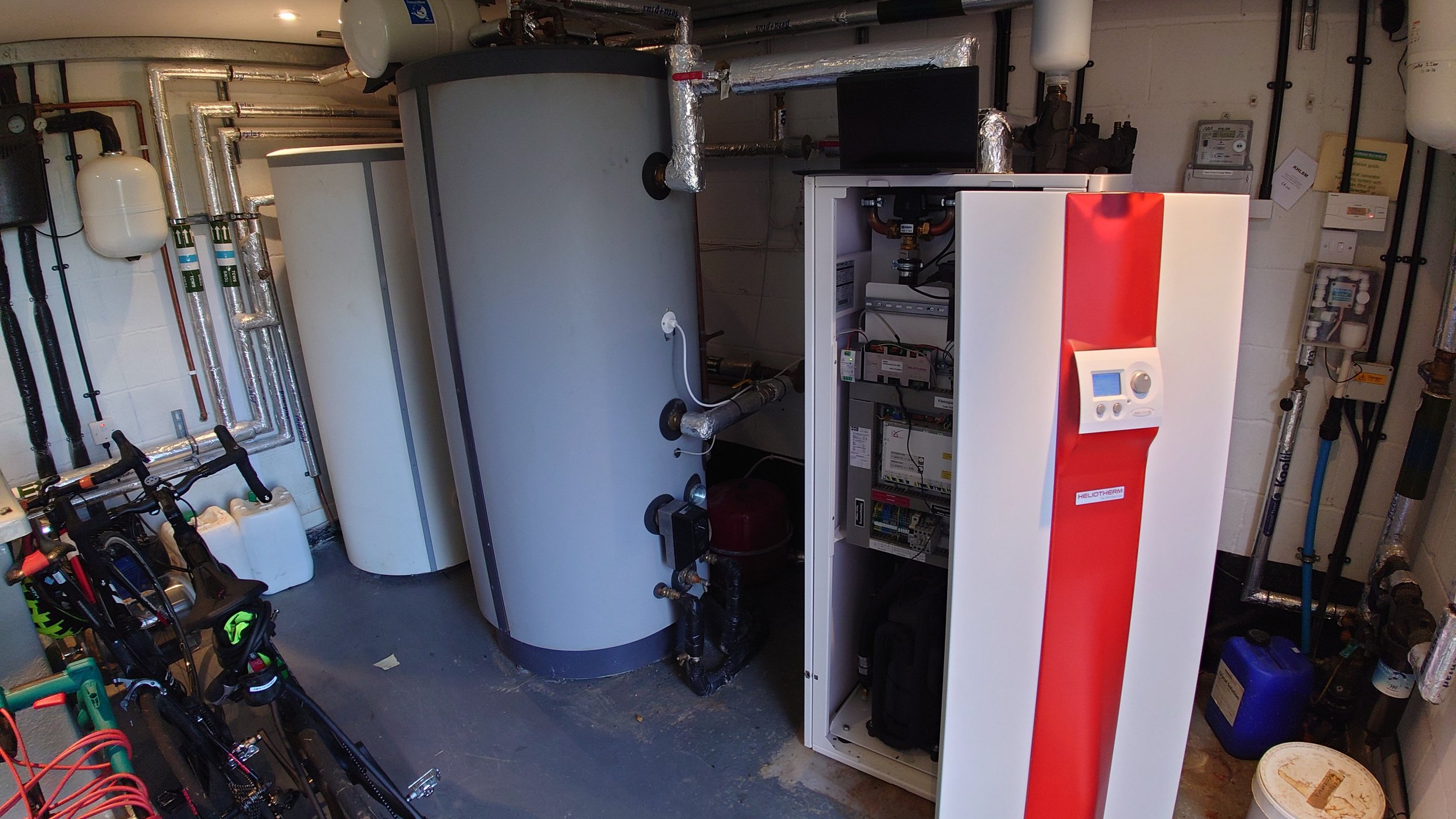
Ground Source Heat Pump.
A ground source heat pump (GSHP) is a system that transfers heat from the ground into a building to provide heating and hot water. It uses buried pipes (called ground loops) to absorb natural heat stored in the earth. Because the ground stays at a fairly constant temperature year-round, the system can extract heat even in winter, then concentrate and distribute it indoors using electricity.
Ground source heat pumps are suitable for:
Heating homes and larger buildings, particularly those with outdoor space for ground loops
Providing hot water consistently throughout the year
Colder climates, since ground temperatures are more stable than air temperatures
They work best in well-insulated properties and are commonly paired with underfloor heating or low-temperature radiators. However, they usually require more upfront installation work and space compared to air source heat pumps.
Air Source Heat Pump
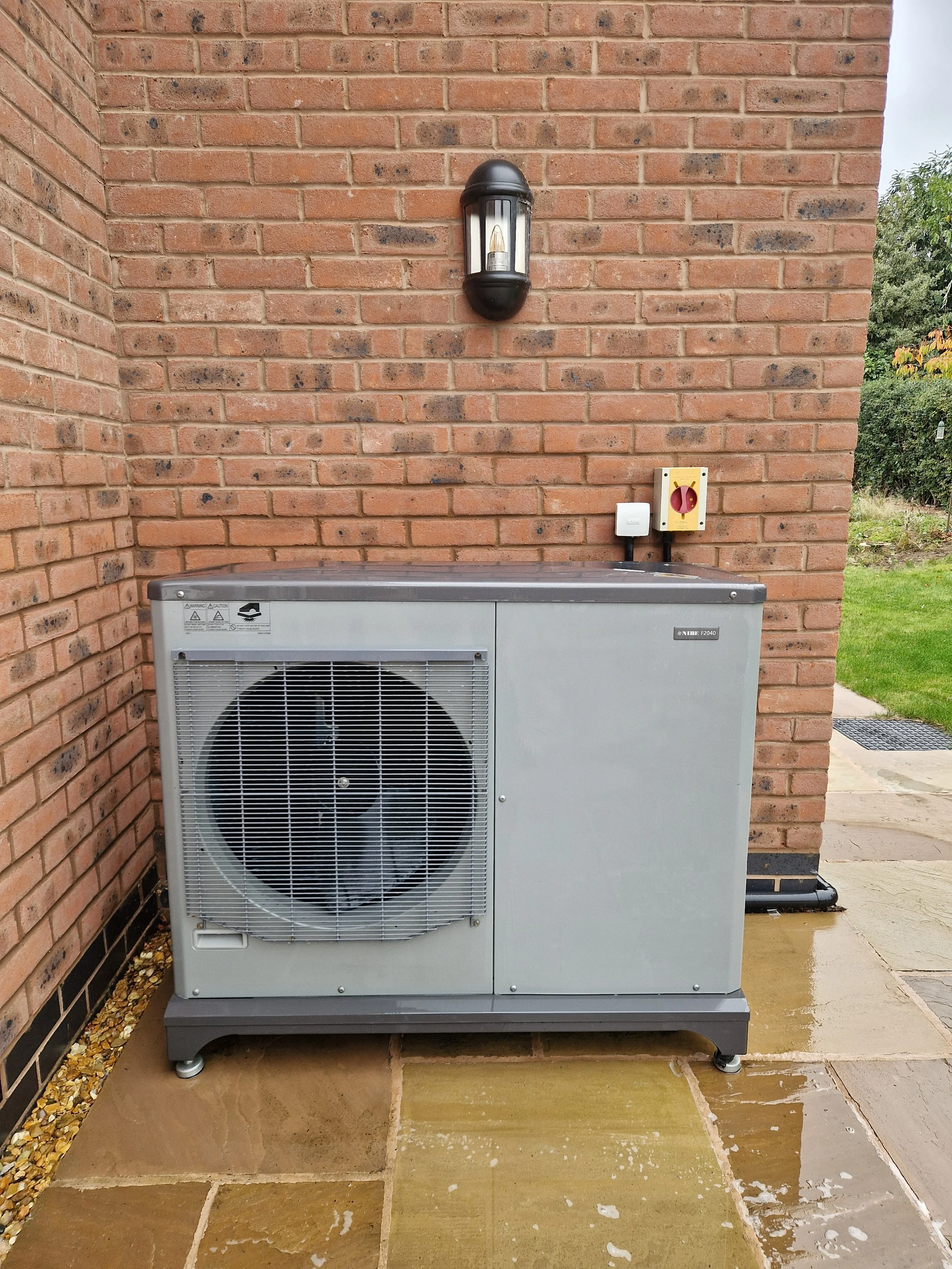
An air source heat pump (ASHP) is a system that transfers heat from the outside air into a building to provide heating and hot water. It works a bit like a refrigerator in reverse: even when it feels cold outside, there is still heat energy in the air, and the pump uses electricity to extract and concentrate that heat, then move it indoors.
Air source heat pumps are suitable for:
Heating homes and small commercial buildings, especially well-insulated ones
Providing hot water for daily use
Reducing carbon emissions, since they are more energy-efficient than traditional gas or oil boilers
Moderate climates, though modern systems can still work in colder temperatures
They are particularly effective in properties with good insulation and are often used with underfloor heating or large radiators, which work well at the lower temperatures heat pumps typically produce.
Air to Air
Air-to-air heating systems provide an efficient and effective way to keep homes warm and comfortable throughout the colder months. Using heat pump technology, these systems extract heat from the outside air and transfer it indoors, even when outdoor temperatures are low. Unlike traditional heating methods that generate heat through combustion, air-to-air systems move existing heat, making them a highly energy-efficient solution for modern households.
In addition to providing reliable heating, many air-to-air systems can also offer cooling during warmer weather, delivering year-round climate control from a single unit. They are quick to respond, easy to operate, and can help reduce energy bills when compared with conventional electric heating. With low maintenance requirements and environmentally friendly performance, air-to-air heating systems are becoming an increasingly popular choice for homeowners looking to improve comfort while reducing their carbon footprint.